Biological validation underway
A duty round with a clotting agent built in.
LZR-C is a 9mm projectile built to the duty-round standard your officers already carry. A patented chamber in the nose carries a kaolin-based payload into the wound channel on impact.
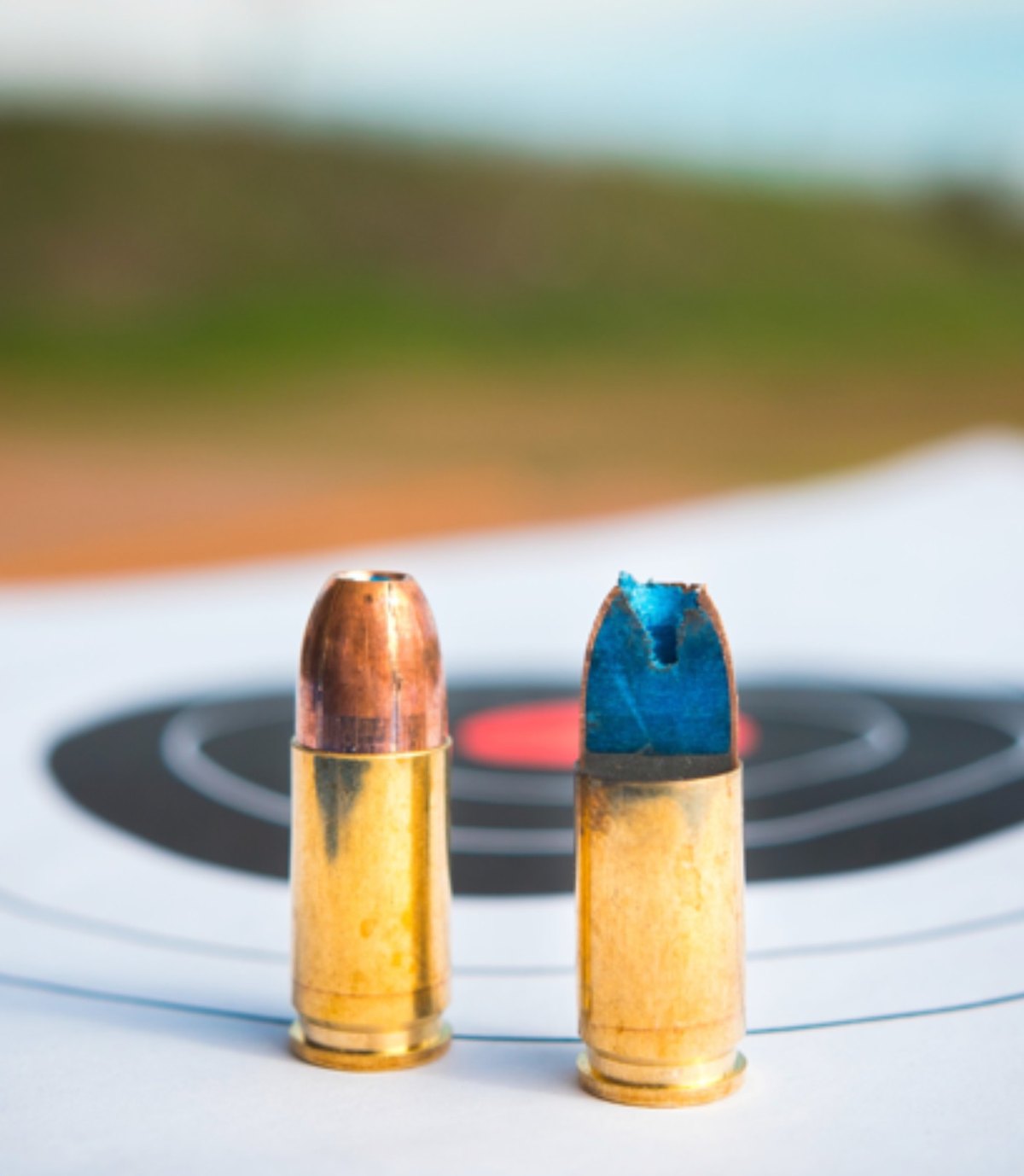 Standard hollow point
LZR-C, payload in the nose
The problem
Some police shootings end in deaths that might have been survivable. Cities pay for them for years.
These figures cover the 25 largest US departments only. Sources: The Marshall Project, The Washington Post, Reuters, NYC ClaimStat, Eastridge et al. (2012). Methodology available on request.
The gap
Duty rounds are engineered to stop a threat. Nothing is engineered for the minutes after.
What the FBI protocol measures
Kinetic performance only, largely unchanged since the late 1980s- Penetration depth
- Expansion diameter
- Barrier performance
What no standard measures today
What happens in tissue after impact- Blood loss
- Time to clotting
- Outcomes of non-fatal hits
Lazarus is building the first tissue-level wound ballistics test standard, with testing run by an independent, M.D.-led research lab.
How it works
A standard duty round, with one addition.
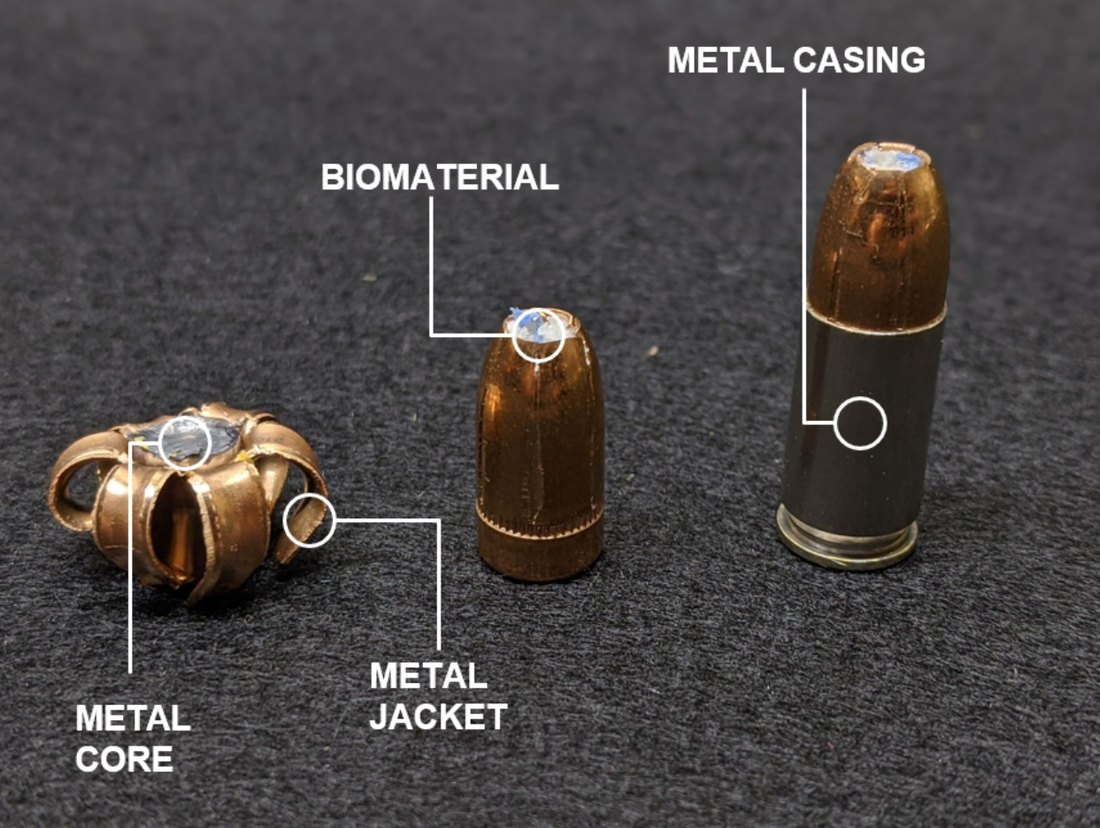
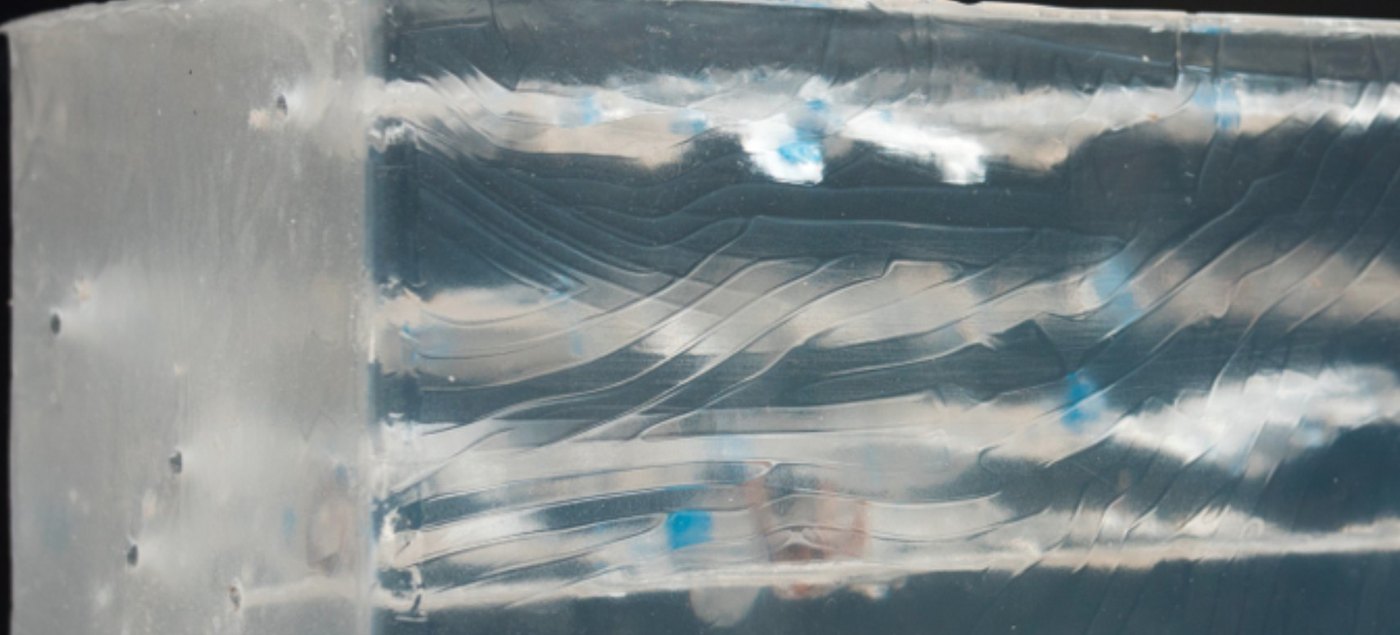
Duty-round performance
Built to the FBI protocol envelope. More than 500 gel tests across barrier types in our own testing.
A known clotting agent
The payload is kaolin-based. Kaolin is the active agent in Combat Gauze, the hemostatic dressing used across the US military.
Released on impact
A patented chamber in the nose releases the payload as the projectile expands.
Whether the payload reduces bleeding in live tissue is still being tested. The validation plan below is how we answer it.
Validation
Here is what is proven, what is underway, and what comes next.
The ballistics work in our testing. Every next step is built to produce data someone else can check.
Ballistic parity
500+ FBI-protocol gel tests across barrier types, run in-house
Survives and disperses
The payload stays intact on impact and spreads through the gel
Minimum effective dose
Blood testing at Texas A&M to find the smallest payload that does the job
Clotting under flow
A flowing-blood model to check clot hold, washout and downstream clot risk
Third-party ballistics
An NIJ-approved lab confirms FBI protocol performance independently
Live-tissue study
A peer-reviewed study against a matched control, run by an independent lab
Ammunition makers have told us what they need before loading a new projectile: peer-reviewed live-tissue data. That study is the center of our current plan.
The precedent
Body cameras went from pilot to standard in about a decade.
Once the data showed body cameras lowered complaints and settlements, adoption followed. We expect LZR-C to follow the same path, with proof first.
Body cameras in US policing
| Body cameras | LZR-C | |
|---|---|---|
| Trigger | Public pressure after Ferguson (2014) | Settlement costs from survivable wounds |
| Who pays | Cities, backed by federal grants | Cities, with support we expect from insurers and risk pools |
| Proof | Linked to fewer complaints and settlements | Peer-reviewed live-tissue data, now in progress |
| Support | Police and reform groups alike | Designed to serve both |
Sources: R Street Institute (2025); DOJ/COPS body-worn camera materials. Full sources available on request.
For agencies
Built to fit how your department already buys and carries ammunition.
LZR-C is being designed with use-of-force trainers, not just engineers. The goal is a round your officers carry the same way they carry today's.
Same platform
A 9mm duty projectile built to the FBI protocol envelope. It is designed to work in the duty weapons your officers already carry.
Same buying channel
LZR-C is loaded and sold by established ammunition makers. Agencies would buy "LZR-C Equipped" cartridges through the supplier relationships they already have.
Same replacement cycle
Duty ammunition is replaced every 6 to 24 months whether or not it is fired. A switch can happen on your normal schedule.
A duty round built to the standard you already hold, designed so officers have nothing new to learn.
A documented, tested step aimed at the most expensive category of claims your city carries.
A visible commitment to the people on both sides of a use-of-force incident.
We want to hear from agencies now.
We are not selling yet. We are asking chiefs, trainers and risk managers what they would need to see before considering LZR-C, so the validation answers the right questions.
Business model
We make the projectile. Ammunition makers build and sell the cartridge.
Component
Lazarus
Makes the LZR-C projectile. Owns the patents, the brand, the test data and the standard.
Cartridge
Ammunition makers
Load LZR-C into finished cartridges and sell them through their existing law enforcement contracts.
End user
Agencies
Municipal, state and federal agencies buy "LZR-C Equipped" duty ammunition.
US-made police duty rounds a year, domestic and export. Replaced on a schedule.
No loading line, primer, powder, case or hazmat licensing on our side.
"LZR-C Equipped" on the maker's box, the way "Intel Inside" works on a laptop.
Our competitors are our channel. LZR-C is designed to ship inside their cartridges as a premium component.
Protection
Three layers of protection that build on each other.
Kaolin itself is not proprietary. What is protected is how the payload is carried and released.
Sold as ammunition, not as medicine.
LZR-C is designed as standard handgun ammunition. It is not armor-piercing and not a destructive device, so it moves through existing commerce channels.
It is not a drug or a device, and it is not marketed for medical or therapeutic use.
This reflects our working view from an initial consultation with regulatory counsel. A formal written review is part of our current plan.
Team
An inventor, an engineer and a use-of-force operator.

Ben Omonira
Founder and CEO
- Chemical engineer, Texas A&M
- Three years in M&A at Deloitte across more than $25B in deals
- Named inventor on both patents
Nathan Panak
Co-founder and CTO
- Machinist and manufacturing engineer, 10+ years
- Has built more than 100 prototypes
- Named inventor on the continuation patent
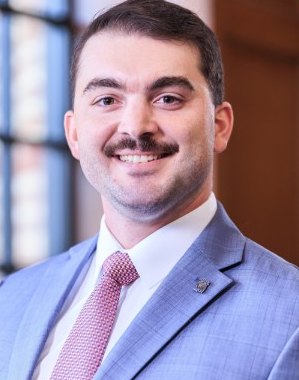
Alex Brown
Co-founder, business development
- Former Marine Corps military police
- Ran a Marine law enforcement academy for three years and taught use of force
- Has managed real use-of-force incidents

Advisor
John Steinbaugh
25-year Army Special Forces medic and former USSOCOM medical combat developer. Helped bring the XSTAT hemostatic device at RevMedx to military medics.
Science
Texas A&MBlood testing underway to set the minimum effective payload dose.
Independent lab
M.D.-led research partnerA third-party lab identified to run the tissue-level study.
Recognition
Winner, Rice Veterans Business BattleJudge feedback is built into our current plan.
Investors and partners
We are funding the data partners have asked for.
Our current round pays for independent ballistics, the flowing-blood test and the live-tissue study. That data is what ammunition makers need before a supply deal.
- Two granted US patents and 500+ tests to date
- A capital-light component model with recurring demand
- A clear, milestone-gated path from validation to supply agreements
- A team that combines the inventor, the engineer and the end-user operator
Request investor materials
We share the deck and supporting files directly. Tell us a little about yourself and we will follow up personally.
- Investor deck
- Financial model
- Patent files
- Liability methodology
- Hemostatic literature
Questions
What people ask us first.
Does LZR-C change how officers shoot or train?
It is designed not to. LZR-C is a 9mm duty projectile built to the FBI protocol envelope, meant to be loaded into the same kind of cartridge and fired from the same duty weapons. Third-party ballistic testing is part of our plan to confirm this independently.
Is it proven to reduce bleeding?
Not yet. Kaolin's clotting effect is well documented, and our in-house testing shows the payload survives impact and disperses. Whether LZR-C reduces blood loss in live tissue is the open question, and a peer-reviewed study against a matched control is how we will answer it.
Is this a medical product?
No. LZR-C is designed and sold as ammunition. It is not a drug or a device, and it is not marketed for medical or therapeutic use.
Can my agency buy it today?
No. LZR-C is in development and not yet commercially available. We are talking with agencies now so the validation answers the questions they will ask. When it is available, it will be sold by established ammunition makers as "LZR-C Equipped" cartridges.
Why would a city pay more for duty ammunition?
Because the costs of a fatal shooting are far larger than the cost of ammunition: settlements, legal defense, insurance and public trust. If the live-tissue data supports it, a small premium per round sits against some of the most expensive claims a city carries.
Contact
Talk with us.
Agencies, risk managers, insurers, ammunition makers, investors and press are all welcome. We reply personally within two business days.